Cholesterol Testing That Goes Deeper Than a Standard Panel
A routine lipid panel tells you your numbers are high. It doesn't tell you why. At Wilmington Functional Medicine, every service we offer is designed to answer that question — and give you a clear path forward.
OUR TESTING SERVICES
The Testing We Use to Find Root Causes
High cholesterol is one of the most commonly mismanaged conditions in standard medicine — not because it's hard to detect, but because most testing stops too early. We treat cholesterol as a metabolic symptom: something caused by upstream dysfunction in your gut, liver, hormones, blood sugar regulation, or inflammatory pathways.
Our clinical work focuses on:
- High LDL and elevated total cholesterol
- Abnormal particle size or count (NMR findings)
- Metabolic syndrome and insulin resistance linked to lipid issues
- Cholesterol elevation driven by gut dysbiosis or poor absorption
- Patients who've been advised to take a statin and want to understand why first
WHY TESTING MATTERS
Why Advanced Testing Changes the Outcome
High cholesterol is not one problem. It's a symptom that can come from a dozen different upstream issues — insulin resistance, gut dysbiosis, poor bile acid recycling, mitochondrial dysfunction, chronic inflammation, liver overproduction, or nutrient deficiencies. Without testing that looks for these drivers specifically, treatment is guesswork.
That's why we use a layered testing approach. Depending on your history, symptoms, and what a standard workup has already shown, we'll recommend one or more of the following:
Advanced Blood Lipid Testing
What It Includes:
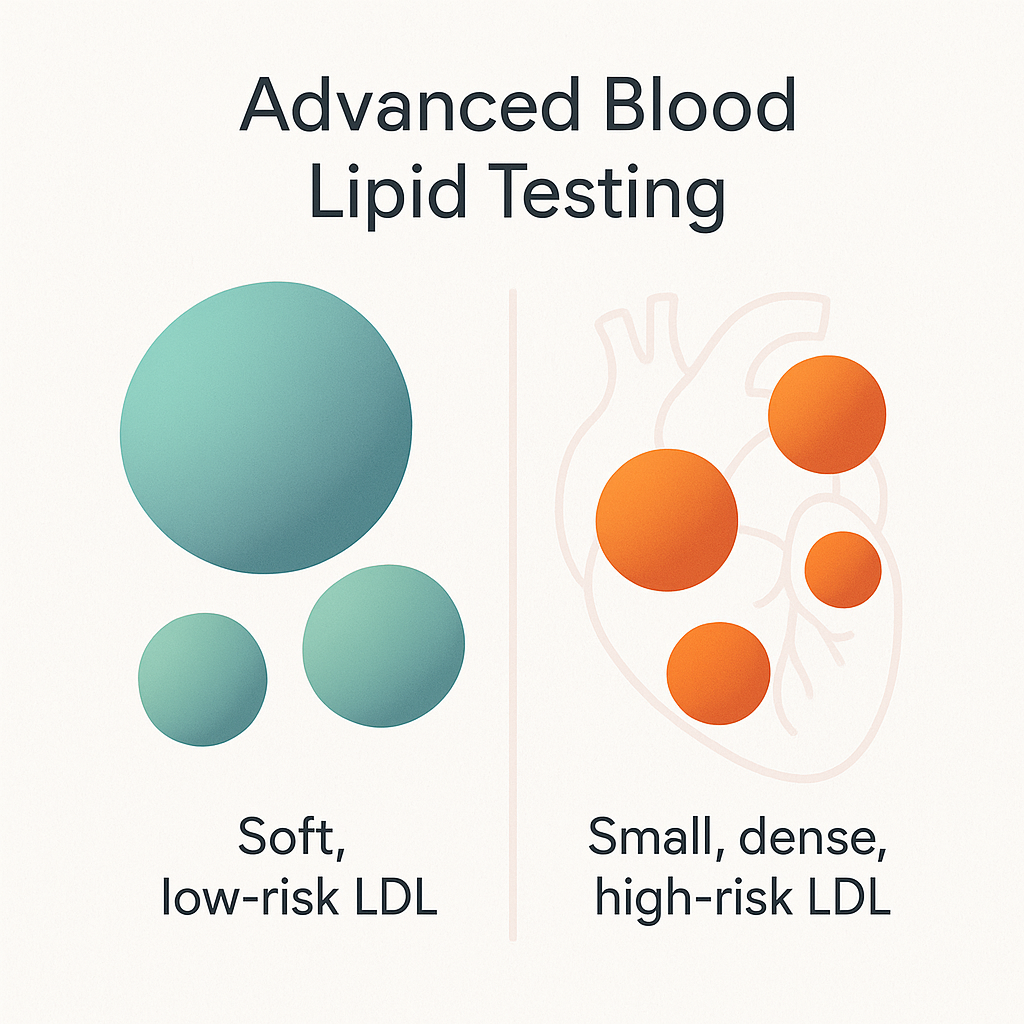
- NMR Lipoprotein Analysis — measures the number and size of LDL particles, not just the total amount. Small, dense LDL particles are significantly more dangerous than large, buoyant ones — and a standard panel can't tell the difference.
- Omega-3 / Omega-6 Ratio — chronic imbalance between these fatty acids is a major driver of inflammation that worsens cardiovascular risk. CK (Creatine Kinase) — important for patients considering or already on statins, and as a baseline marker of muscle and metabolic health.
- Inflammatory markers — including hsCRP and others depending on your history. Inflammation is what makes elevated cholesterol dangerous, not cholesterol alone.
Why It Matters for Cholesterol
NMR testing is one of the most significant upgrades over a standard lipid
panel. Two patients can have the same LDL number — one with large particles
at low risk, one with small dense particles at high risk. NMR shows which
pattern you have. Combined with omega and inflammatory data, it gives us
a real picture of your cardiovascular risk — not just a number to manage.
Comprehensive Stool Testing
Why It Matters for Cholesterol
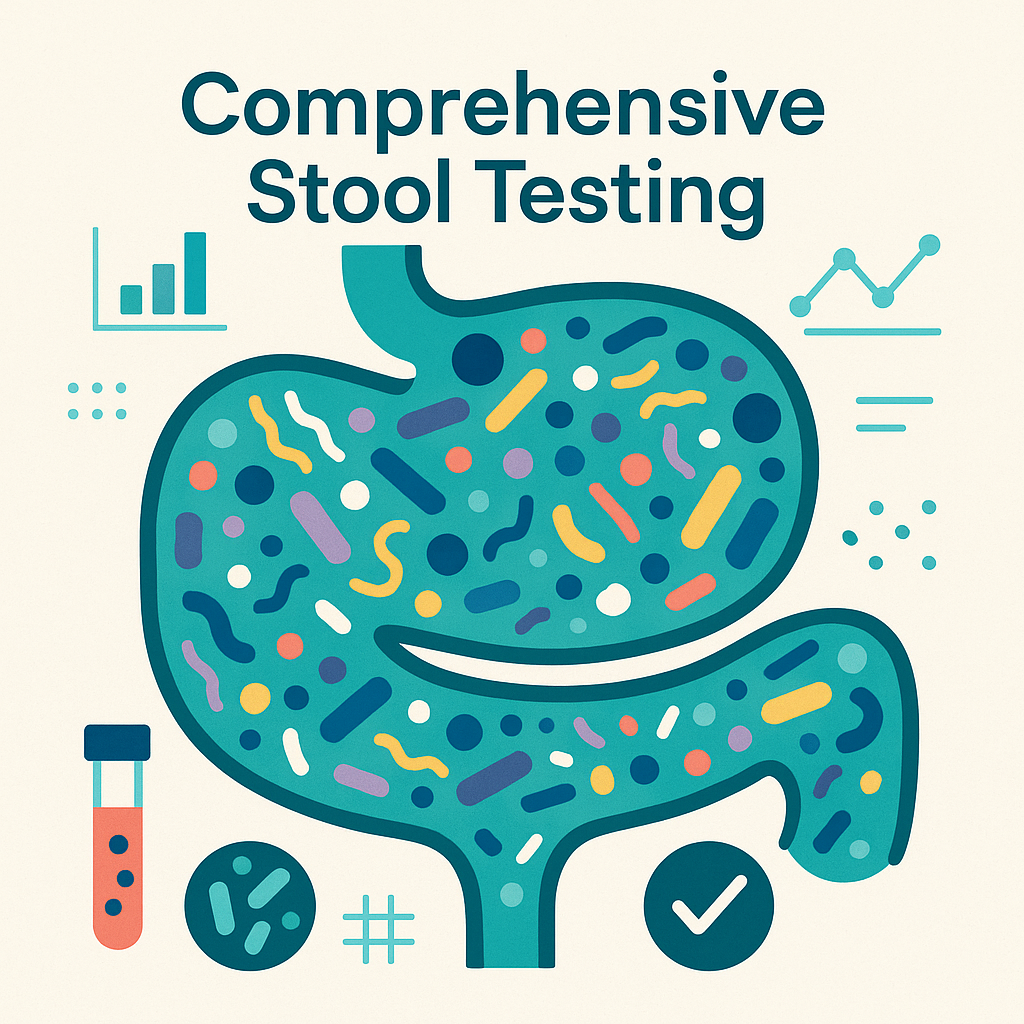
Bile acids are made from cholesterol in the liver, secreted into the gut to help digest fat, then reabsorbed and recycled. If this cycle is impaired — due to gut dysbiosis, poor microbiome diversity, or digestive dysfunction — cholesterol can't be properly eliminated, and liver production increases. Many patients with persistently high cholesterol have an underlying gut issue driving it. Stool testing is how we find out.
What It Measures
- Gut microbiome composition — which bacteria are present, in what quantities, and whether the balance is healthy or dysbiotic Pathogenic organisms — including bacteria, parasites, and fungi that may be disrupting normal metabolic function
- Digestive markers — short-chain fatty acids, pancreatic elastase, and other indicators of how well you're digesting and absorbing food
- Bile acid metabolism — relevant because bile acids are the primary pathway through which the body eliminates cholesterol
Organic Acids Test (OAT)
What It Measures
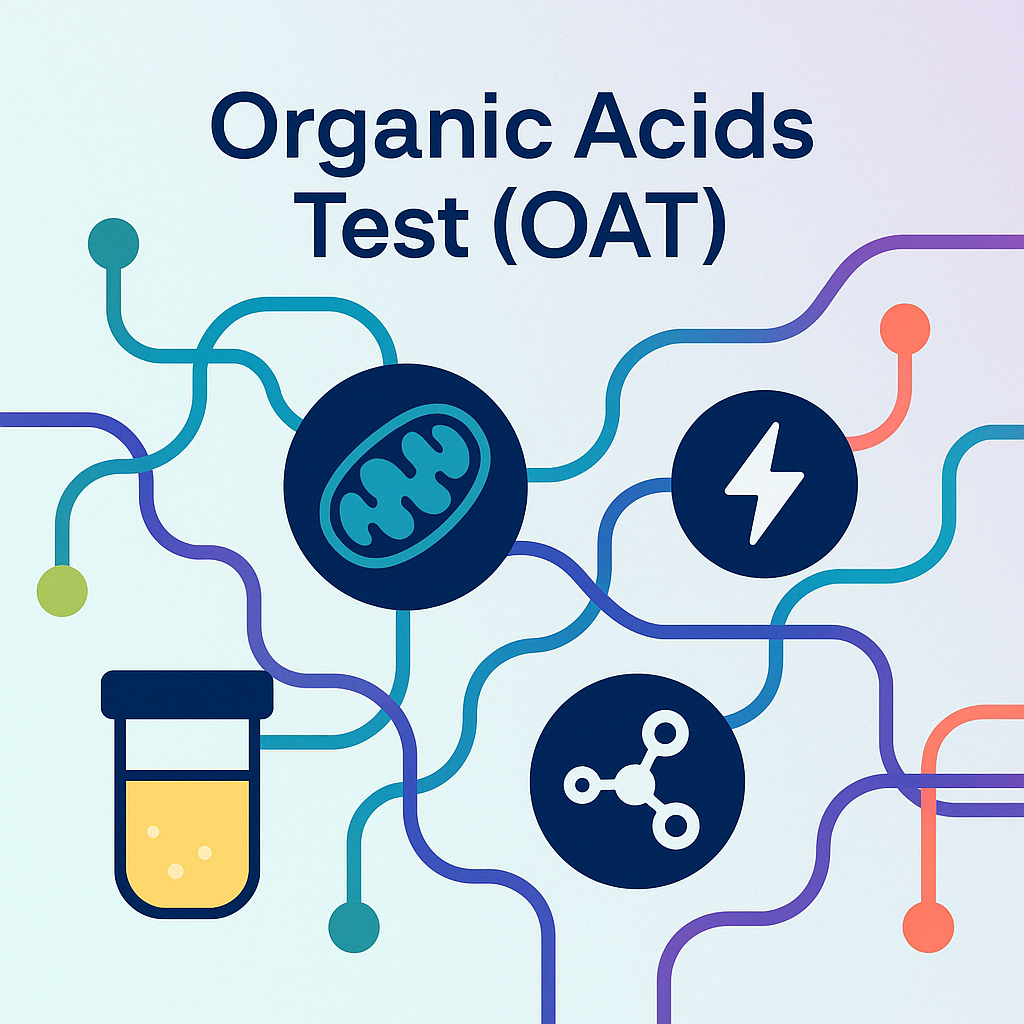
The OAT is a urine-based test that measures over 70 metabolic markers, including:
- Mitochondrial function markers — how efficiently your cells produce energy
- B vitamin status — deficiencies in B12, B6, folate, and biotin affect methylation and cholesterol metabolism
- Neurotransmitter metabolism — relevant for overall metabolic regulation
- Yeast and bacterial overgrowth markers — overgrowth of Candida and certain bacteria produces metabolic byproducts that affect systemic inflammation and liver function
- Oxidative stress indicators — chronic oxidative stress worsens the cardiovascular impact of elevated LDL
Why It Matters for Cholesterol
The OAT gives us a wide-angle view of how your metabolism is functioning at the cellular level. It often reveals deficiencies, overgrowth patterns, or mitochondrial dysfunction that explain why standard interventions (diet, exercise, even medication) haven't moved the needle. It's particularly useful for patients whose cholesterol issues seem resistant to obvious explanations.
HOW WE USE RESULTS
What Happens After Testing
We don't send you a lab report and wish you luck. When your results are ready, we schedule a dedicated test review appointment with your doctor. We walk through every significant finding in plain language, explain what it means for your situation specifically, and build a care plan based on what we actually found — not a standard protocol.
Most patients tell us this single appointment is more informative than years of standard care. Because it usually is.
REMOTE TESTING NOTE
Can Testing Be Done Remotely?
Available Remotely Throughout North Carolina You don't have to be in Wilmington to work with us. Most of our testing can be completed through a local lab draw near you or with at-home collection kits, and consultations are available by telehealth. We currently serve patients across North Carolina.
Consultations and test review appointments are available via telehealth for patients across North Carolina.
Ready to Get Real Answers?
Start with a free discovery call. We'll talk through your situation, explain what testing makes sense, and let you know exactly what to expect.